A damp crawl space rarely stays a crawl space problem. The musty smell drifting up through the floorboards, the sticky summer air inside the house, and the soft spot in a floor joist discovered years too late often trace back to the same quiet source: ground moisture evaporating from bare soil under the home, plus humid air moving through foundation vents.
The best residential crawl space ventilation strategy depends on your climate, but the principle is the same everywhere: stop ground moisture at its source, then control the air that remains. In dry climates, well-placed foundation vents with a ground vapor barrier can keep a crawl space dry. In humid climates, open vents often make things worse by pulling warm, moist outdoor air into a cool space where it condenses — so sealing the crawl space and conditioning the air with a dehumidifier or a small supply of conditioned air is usually the stronger choice.
Why Ground Moisture Under Your Home Ends Up in Your Living Room
A crawl space floor is usually bare earth, and bare earth is never truly dry. Soil holds water even when the surface looks dry, and that water constantly evaporates into the enclosed air above it. Humidity climbs, wood framing absorbs moisture, and condensation forms on cool ductwork, pipes, and floor joists whenever the air reaches its dew point.
What turns a damp crawl space into a whole-house problem is the stack effect. Warm air inside a home rises and escapes through the upper levels and roof, and replacement air is drawn in from below — straight through the crawl space. Much of the air on the ground floor has passed through the crawl space first, so mold spores, musty odors, and excess humidity under the house are delivered directly into the living rooms.
How Do Crawl Space Vents Actually Move Moist Air?
Foundation vents work on a simple idea: openings on opposite sides of the foundation let wind push fresh air through the crawl space, carrying water vapor out with it. When the outdoor air is drier than the crawl space air, this works reasonably well, and the system costs nothing to run beyond occasional cleaning.
The trouble starts when the outdoor air is more humid than the crawl space air, which is common on summer days in the eastern and southern United States. Warm outdoor air entering a crawl space at 65 to 75 degrees Fahrenheit cools down, and cool air holds less moisture — so the excess water condenses on joists, ducts, and the ground itself. Instead of drying the space, the vents are now wetting it. Vents can only make the crawl space match the outdoors; when the outdoors is humid, that is the opposite of what you want.
Reading Your Crawl Space Before Choosing a Ventilation Strategy
No two crawl spaces behave the same way, so the first step is always an inspection rather than a purchase. On a warm, humid day, take a flashlight, a hygrometer, and a notepad underneath the house. Measure relative humidity and temperature in several spots, look for standing water or damp soil, and check the wood: press a screwdriver gently against a joist, since sound wood resists while soft or crumbly wood signals decay that needs a professional assessment.
Measure humidity in at least three locations, including the center of the space and near any ductwork, and record the readings with the date and outdoor conditions.
Look for blocked vents, collapsed insulation, disconnected duct joints, plumbing drips, and any place where rainwater ponds against the foundation outside.
Check the access door: a loose or unsealed door is a large, uncontrolled opening that admits humid air and pests alike.
Vented Crawl Space Strategies That Still Work in Dry Climates
In arid and semi-arid regions, a vented crawl space remains a practical, low-cost approach — provided the vents are sized, placed, and maintained correctly. The International Residential Code (IRC) Section R408 sets the baseline: one square foot of net free vent area for every 150 square feet of crawl space floor when there is no ground vapor barrier. Where a vapor barrier is installed, the code allows the ratio to drop to one square foot per 1,500 square feet.
Placement matters as much as area. Vents should sit on at least two opposite foundation walls so air travels across the space, with openings near the corners where stagnant air collects. Walk the foundation each spring and autumn, clear debris from every vent, and replace rusted screens and broken louvers promptly.
Sealing the Crawl Space and Conditioning the Air Instead
When vents bring in more moisture than they remove, the modern answer is to stop fighting the outdoor air and remove it from the equation. Sealing, often called encapsulation, turns the crawl space into a controlled part of the house. The IRC recognizes this approach in Section R408.3, which permits an unvented crawl space with a Class I vapor retarder on the ground, sealed vents, and mechanical drying or conditioned air.
The results in field studies are striking. In a 2005 study by Advanced Energy on identical homes in North Carolina, sealed crawl spaces averaged about 52 percent relative humidity while vented crawl spaces averaged about 71 percent — and the vented spaces spent more than half the year above 70 percent, the threshold where mold growth accelerates.
Remove debris, old fallen insulation, and organic material, and fix plumbing leaks and drainage problems first.
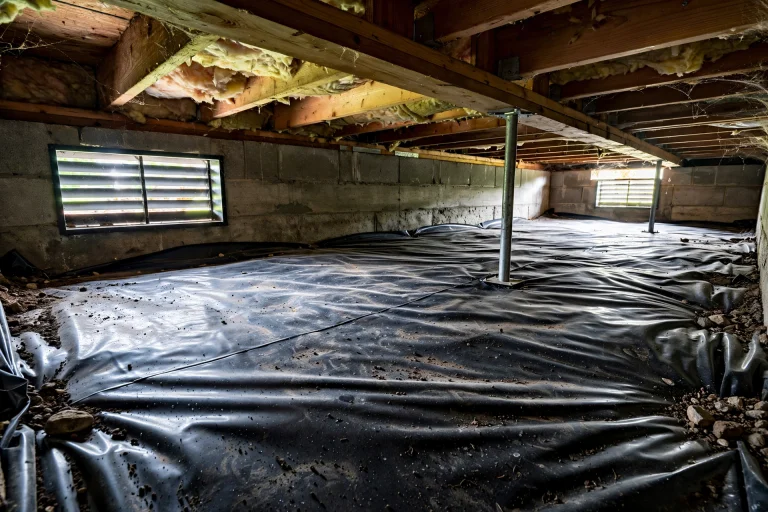
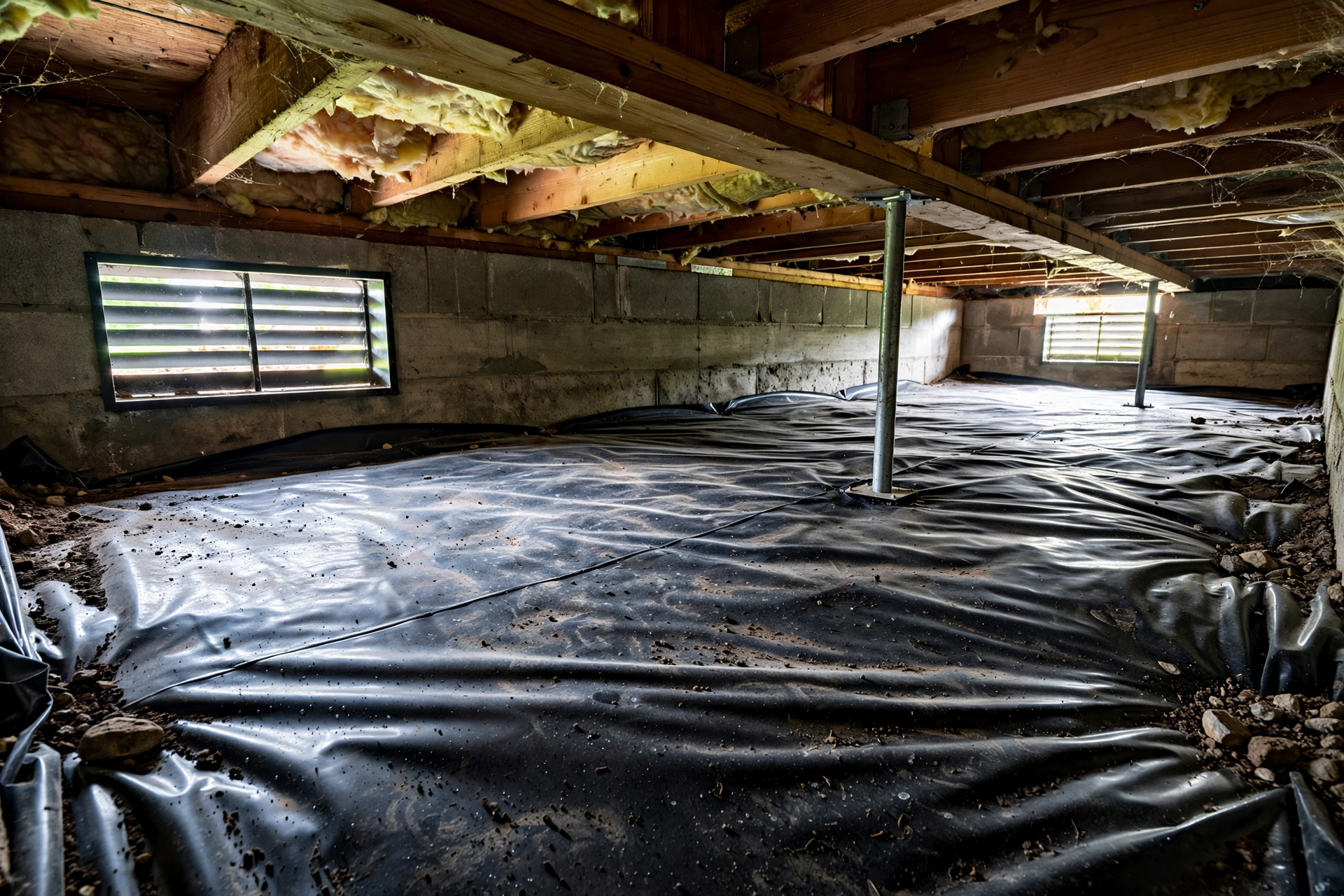
Grade the soil toward a low point or sump, then install a heavy polyethylene vapor barrier over the entire floor and up the foundation walls.
Seal every seam with tape, seal around piers and pipes, then seal the foundation vents and the access door with rigid foam and caulk.
Add humidity control — a dedicated crawl space dehumidifier or a small supply of conditioned air — and a hygrometer to verify the space stays in range.
Sealing is not a do-it-yourself project for everyone. Working in a low crawl space carries real risks, and a poorly sealed barrier traps moisture rather than excluding it. If the space has standing water, mold growth, or structural damage, bring in a qualified contractor first.
Crawl Space Fans, Dehumidifiers and Humidistats: Picking the Right Machine
Between passive vents and full encapsulation sits a middle ground of mechanical equipment, and choosing the right device depends on which problem you are solving. A crawl space exhaust fan moves air; a dehumidifier removes water from air; a humidistat decides when either one should run. Confusing these roles is one of the most common reasons homeowners spend money and see no improvement.
Exhaust fans suit vented crawl spaces in dry or mixed climates. Mounted behind an existing vent, a fan pulls stale, damp air out and draws fresher air in through the vents on the opposite side, guaranteeing airflow even on still days. The most useful models include a built-in humidistat so the fan runs only when relative humidity rises above a set point, typically around 55 to 60 percent. Dehumidifiers suit sealed crawl spaces, where they are the primary humidity control; choose a unit built for cool conditions with continuous drainage.
Ground Covers and Drainage That Cut Moisture at the Source
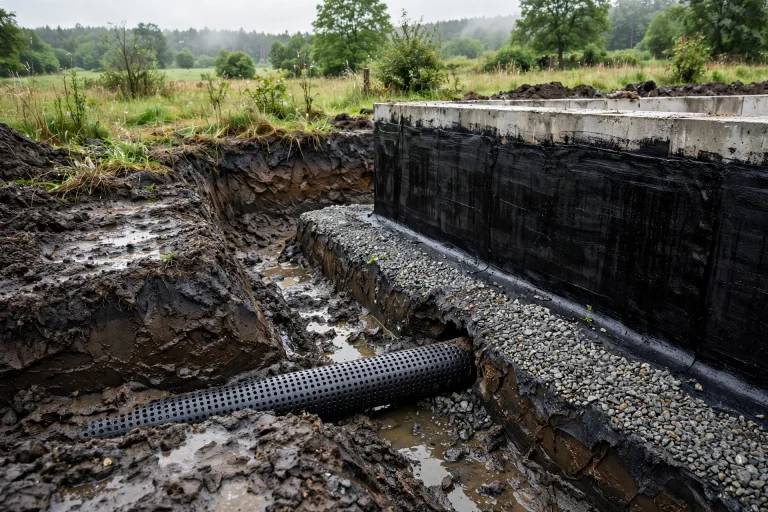
Every ventilation strategy works better when the ground stops feeding it moisture. A vapor barrier — polyethylene sheeting laid over the dirt floor — is the single most effective moisture control measure in a crawl space, and it helps vented and sealed spaces alike. The code minimum is 6-mil polyethylene, but most professionals recommend 10-mil or 20-mil material for durability. Overlap the seams by at least 12 inches, seal them with seam tape, and run the sheet up the foundation walls.
Keep gutters clean, extend downspouts at least six feet from the foundation, and grade soil to slope away about six inches over the first ten feet.
Choose 10-mil or 20-mil polyethylene for the ground cover; thin 6-mil sheeting meets code but tears easily and rarely lasts.
If water ever stands in the crawl space after rain, treat it as a drainage failure first and a ventilation problem second.
When Crawl Space Moisture Calls for a Specialist, Not a Weekend Fix
Most ventilation maintenance — clearing vents, replacing a louver, laying a vapor barrier on a clean, dry floor — is well within the reach of a careful homeowner. Some conditions are not. Standing water that returns after every rain, visible mold covering large areas, wood that crumbles under a screwdriver, or a floor that sags or bounces all point to problems that need professional diagnosis before any ventilation work begins.
There are safety concerns beyond mold as well. Crawl spaces can harbor pests, animal waste, sharp debris, and in older homes, asbestos insulation or lead paint. Never enter a crawl space with a gas smell, signs of sewage, or standing water near electrical wiring — call the utility or a licensed professional instead. Structural repairs to joists, beams, and sill plates also belong to licensed contractors.
Final Thoughts: Choosing the Crawl Space Ventilation Strategy Your Climate Rewards
There is no single best crawl space ventilation strategy for every home, and that is the point most articles on the subject miss. The right choice follows from three facts you can measure yourself: your climate, your crawl space humidity readings, and whether the ground is covered. Dry climate with readings below 55 percent? Maintain your vents and add a vapor barrier. Humid climate with readings past 60 percent every summer? Close the vents, seal the space, and control humidity mechanically.
Whatever you choose, make the crawl space part of your regular home routine rather than a place you visit once a decade. Check the hygrometer each season, clear the vents, confirm the dehumidifier is draining, and look at the wood. A dry crawl space protects the structure, steadies indoor humidity, and keeps the air upstairs cleaner.
Crawl Space Ventilation Questions Homeowners Keep Asking
Should crawl space vents stay open or closed in summer?
It depends on your climate. In dry regions, open vents help carry moisture out during summer. In humid regions, open vents usually bring warm, moist air into the cool crawl space, where it condenses on joists and ducts — so keeping them closed and sealing the space is often the better choice.
How many foundation vents does a crawl space need?
Under IRC Section R408, a vented crawl space needs one square foot of net free vent area per 150 square feet of floor area without a vapor barrier, or one square foot per 1,500 square feet with a vapor barrier installed.
Does a vapor barrier replace crawl space ventilation?
No, but it removes the largest moisture source, which makes any ventilation strategy far more effective. A vapor barrier stops ground moisture from evaporating into the air; ventilation or dehumidification then handles the smaller amount of moisture entering from outside air, leaks, and the house itself.
What humidity level should a crawl space stay below?
Aim for relative humidity between 30 and 50 percent, and keep it below 60 percent at all times. The EPA advises keeping indoor humidity below 60 percent, ideally in the 30 to 50 percent range, because mold growth becomes likely above that threshold.
Can I seal my crawl space vents myself?
Sealing vents with rigid foam and caulk is a manageable DIY task, but full encapsulation — vapor barrier, sealed penetrations, drainage, and dehumidification — is a bigger job that many homeowners hire out. If the crawl space has standing water, mold, or damaged wood, get a professional assessment first.
Why does my house feel humid even though the air conditioner runs all day?
The stack effect may be pulling damp crawl space air upstairs faster than the air conditioner can dry it. If the crawl space is humid, the air entering the living areas carries that moisture with it.
About the Author