Every homeowner asking about renovation is really asking two questions at once: how do I make this house work better for the life I actually live, and will the money come back when I sell? The two goals are not the same. A project can ease daily life yet add little to a sale price, while a showpiece room can impress a buyer and do nothing for an ordinary Tuesday. The smartest affordable renovations do both jobs at once.
Affordable, here, means projects a typical homeowner can fund without a second mortgage: most land between a few hundred dollars and a few thousand, with larger exterior replacements reaching into the low five figures. That range changes the strategy. The goal is not one transformed room while the rest of the house falls behind. It is to lift the whole house by one level — more light, more storage, less wasted energy, and a front door that no longer announces neglect.
- In short: The affordable renovations that best improve both everyday function and property value are whole-house basics done well: fresh neutral paint throughout, a working and welcoming entry, a garage door and front door that operate and look the part, better storage in every room that lacks it, and energy fixes such as sealing air leaks, adding attic insulation, and fitting a smart thermostat. Cost-versus-value data consistently shows exterior replacements and minor refreshes recovering a larger share of their cost than luxury remodels, and buyers favour a home that feels maintained, bright, and easy to live in.
Start With a Whole-House Walk-Through Before You Spend a Dollar
The most expensive renovation mistake is also the most common: starting with the project that excites you rather than the one the house needs. Walk through slowly, room by room, with a notebook, and record what actually interrupts daily life: a sticking front door, a hallway with no place for coats, a bedroom that stays cold, a bathroom fan that does nothing. These small frictions are the real brief — and exactly what buyers notice, because buyers walk the same route.
Score each problem on three questions. Does it affect daily use, or only appearance? Will a buyer notice it within ten minutes? Does leaving it risk a bigger repair later, such as a slow leak? Problems scoring on all three go first. This triage takes an afternoon and costs nothing, yet it prevents the classic failure: spending the whole budget on one beautiful room while the house quietly deteriorates around it.
The Entry and Exterior Earn Their Keep Before Anyone Steps Inside
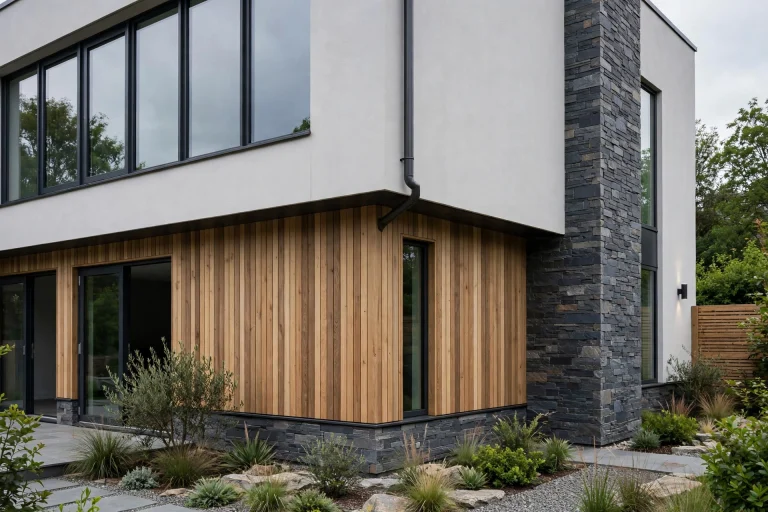
Buyers form an opinion from the pavement, and so do appraisers. That is why exterior replacements repeatedly top national cost-versus-value rankings: according to the 2025 Cost vs. Value Report, a garage door replacement is estimated at around 268 percent cost recovery and a steel entry door at around 216 percent. Those are estimates built from contractor costs and estate-agent judgements, not guaranteed profits, but the pattern is real — a home that looks cared for from the street is assumed to be cared for inside.
An affordable exterior refresh does not require replacing everything. Start with the working parts: a garage door that opens smoothly, an entry door that seals and locks without a shove, house numbers that can be read, and a path that is clear, level, and lit after dark. Then add the visible layer: pressure-wash paths, repaint tired trim, refresh mulch, and cut back planting that crowds the walls. Together they change the first sentence a visitor reads about the house.
Fresh Paint and Better Light Reset Every Room at Once
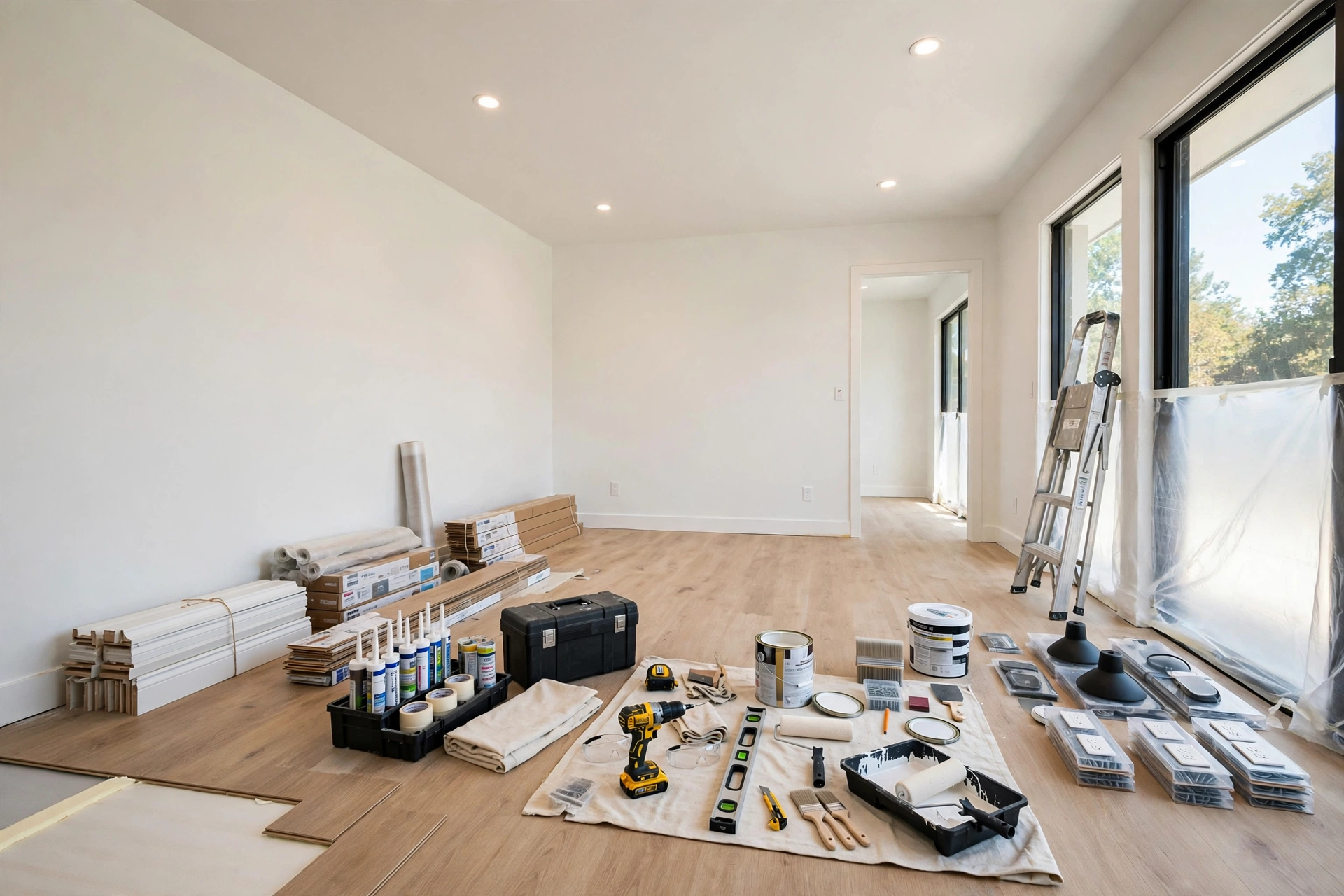
If one affordable project touches every room, it is paint. A whole-house interior refresh in warm, neutral tones typically costs an estimated $2,000 to $3,500 from a painter, or far less in materials alone for a careful DIYer. It changes how every photograph looks, how large each room feels, and how recently the house appears maintained. Paint hides small sins — scuffed walls, patched plaster — provided the repair comes first. Painting over damp without fixing its cause is a delay with a colour chart, not a renovation.
Light is paint’s quiet partner. Many homes are dark not for lack of windows, but because one dim ceiling fitting is asked to light a whole room. Layered, affordable lighting — brighter consistent bulbs, a lamp where reading actually happens, under-cabinet strips in a gloomy kitchen corner, a motion-sensor light at the back door — makes rooms usable in the evening, when most owners actually live in them. A bright home photographs better, shows better, and feels larger.
Storage That Lets Each Room Do Its Actual Job
The second most common complaint in an otherwise sound house is not ugliness but nowhere to put things. Hallways become dumping grounds, bedrooms lose floor space to wardrobes that do not fit, and kitchens overflow because every appliance lives on the worktop. Affordable storage pays off twice: daily life gets easier immediately, and buyers — who open every cupboard during a viewing — read generous, organised storage as extra living space without a single wall moving.
The highest-value storage fixes are usually the simplest. Fit proper shelving and double hanging rails inside existing wardrobes instead of replacing them. Add hooks, a bench, and a shoe tray at the entrance so coats stop colonising the living room. Put adjustable shelving in the understairs cupboard and the garage. In the kitchen, a pull-out rack, drawer dividers, and a pan rail can recover more usable space than a new unit at a fraction of the price.
Comfort Fixes Buyers Can Feel on the First Visit
Some upgrades never appear in a photograph, yet buyers feel them within minutes: a house that holds its temperature, a shower with steady pressure, a home that is quiet when the heating runs. Sealing air leaks around doors, windows, and loft hatches is among the cheapest useful jobs in the house, often costing only caulk, weatherstripping, and an afternoon. Adding or topping up attic insulation is consistently cited as one of the highest-returning modest projects, with national estimates around full cost recovery.
A smart thermostat, at an estimated $150 to $300 installed, is the visible face of this work: scheduled heating, phone control, and a signal that the home’s systems have been thought about rather than merely endured. Low-flow showerheads and tap aerators cut water use without changing how a shower feels, and servicing the boiler before it fails in January beats servicing it after. Remember the chain, though: seal, insulate, then control. Skipping the first two links and buying only the control is the energy equivalent of painting over damp.
Small Touches Across Kitchen and Bathrooms, Not One Gutted Room
Whole-home affordability means resisting the urge to gut a single kitchen or bathroom while the rest of the house waits. A minor refresh across both rooms usually serves daily life and resale better than a luxury overhaul of one. In the kitchen, repaint or reface tired cabinet fronts, replace handles and hinges, fit a modern tap, and add the lighting and storage fixes described above. Industry data puts a minor kitchen remodel at an estimated cost recovery above 100 percent in recent national figures, while a major high-end overhaul typically recovers closer to half its cost.
In bathrooms, the equivalent refresh is new taps and a showerhead, a modern mirror and light, a vanity that actually stores toiletries, re-grouted tile, and a fan that genuinely extracts steam. A midrange bathroom remodel nationally costs roughly $26,000 and recovers around 80 percent, but a refresh at a tenth of that price often removes the same buyer objections — dated, damp, tired — without the same exposure. One caution: plumbing and electrical changes that look simple on video can trigger regulations and insurance questions. Cosmetic refreshes are DIY territory; moving services is not.
Affordable Whole-Home Projects Compared Side by Side
The table below gathers this article’s projects into one planning view. All figures are broad estimates from published national guides; local quotes, house size, and existing condition will move them. Compare projects against each other here, not as a promise of what any single job will cost or return in your market.
Affordable Renovation Spending Traps That Quietly Eat the Budget
A modest budget is unforgiving of the wrong kind of spending, and the traps are consistent. The first is over-improving for the neighbourhood: premium finishes in a street of modest homes rarely return their cost, because buyers compare against neighbouring sale prices, not your receipts. The second is chasing trends instead of fixing fundamentals that never go out of date. The third is starting without a contingency — experienced renovators hold back 10 to 20 percent of the budget for what walls hide, and older homes almost always hide something.
When an Affordable Renovation Stops Being a DIY Job
Most projects in this article sit comfortably within DIY reach: painting, draught sealing, shelving, changing taps and light fittings like-for-like, and refreshing hardware. The boundary is not about confidence; it is about consequence. Anything involving gas, mains electrical work beyond a like-for-like swap, structural walls, roofing at height, asbestos or lead paint, and drainage connected to public sewers belongs with a licensed professional, and often with a permit and inspection. A DIY saving that voids insurance or blocks a future sale is not a saving at all.
Affordable Whole-Home Renovation Questions Homeowners Ask Before Spending
How much should an affordable whole-home renovation cost in total?
House size and starting condition dominate the maths. A useful planning rule is to keep total renovation spending within roughly 10 to 15 percent of the home’s current market value, and to hold 10 to 20 percent of the project budget back as contingency.
Which affordable project adds the most property value first?
On national cost-versus-value estimates, exterior replacements lead: garage door and steel entry door replacements, and manufactured stone veneer, are the projects most often estimated to recover more than their cost. For purely interior spending, fresh neutral paint and a minor kitchen refresh offer the strongest combination of low cost and broad buyer appeal.
Should I renovate room by room or spread the budget across the whole house?
Spread it, with one exception: anything actively damaging the house gets fixed first regardless of room. Buyers judge a home as a whole, and a single showpiece room beside three tired ones reads as a warning — if this room needed that much work, what is hiding in the others?
Do energy upgrades really increase property value, or just cut bills?
Both, but in different proportions. Insulation, draught sealing, and efficient heating controls cut running costs immediately, which is a certain return, and they strengthen a sale story about a well-maintained, efficient home. Published estimates put insulation upgrades at around full cost recovery in national figures, though bill savings alone rarely repay a large project quickly.
Can affordable renovations work in an older home with hidden problems?
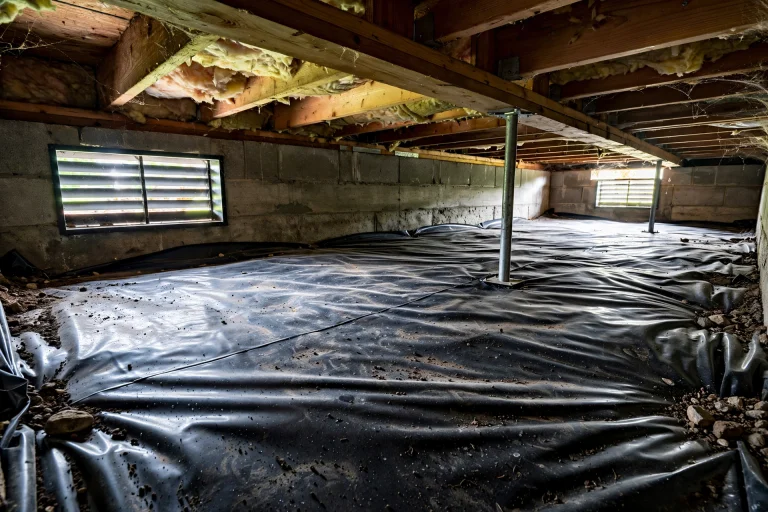
Yes, but the order changes. In homes built before 1980, budget first for discovery: an inspection, typically a few hundred dollars, and a contingency of 10 to 20 percent, because outdated wiring, water damage, and subfloor problems commonly surface once work begins.
What affordable renovation should I skip if I plan to sell soon?
Skip anything highly personal, anything only you will enjoy, and any project whose cost approaches the value it could plausibly add. Luxury finishes, converted rooms with a single narrow use, and extensive landscaping beyond tidy, healthy planting all fall into this category.
A Renovated Home That Still Feels Like Your Own
The best affordable renovation is the one nobody describes as a renovation at all. Visitors notice that the house is bright, that doors close properly, that there is somewhere sensible to put a coat, that the shower is strong and the rooms hold their warmth — and they attribute it to the house itself rather than to any single project. That is the real prize of whole-home thinking: not a transformed room, but a house whose everyday frictions have quietly gone, and whose value has risen because the next owner can feel, within minutes, that nothing here needs urgent attention.
About the Author